

Near Miss in Safety: Definition, Examples, and Why Reporting Matters

In the world of multi-site operations, a near miss is a free lesson. It is a warning sign that something in your workflow, environment, or process went wrong, but fortunately, no one was hurt.
However, capturing that lesson before it turns into a costly incident is a massive operational challenge. For enterprise safety and operations managers, chasing paper reports, relying on manual processes, and lacking real-time visibility across sites leaves organisations exposed to hidden risks.
In this guide, we’ll break down the definition of a near miss in safety, explore real-world examples, and explain how modernising your reporting process can make your sites safer, without adding operational burden to your team.
What is a Near Miss in Safety?
A near miss in safety is an unplanned event that did not result in injury, illness, or property damage, but had the potential to do so. Often referred to as a "close call," a near miss is an indicator that a safety hazard exists and that current control measures may be failing.
To truly understand a near miss, it helps to distinguish it from other common safety terms:
- Hazard: A potential source of harm (e.g., a spill on the floor).
- Near Miss: An event where a hazard was encountered, but no harm occurred (e.g., a worker slips on the spill but catches their balance).
- Incident/Accident: An event where the hazard caused actual harm or damage (e.g., a worker slips on the spill, falls, and breaks their arm).
The key takeaway? A near miss is an incident that was prevented by a fraction of a second or a stroke of luck. Relying on luck is not a sustainable enterprise risk management strategy.
Common Examples of Near Misses in the Workplace
Near misses happen in every industry, but they often go unreported because workers either don't recognise them or find the reporting process too difficult. Here are examples of near misses across different operational environments:
Construction and Contracting
- Dropped Objects: A hammer falls from scaffolding and lands just inches away from a contractor walking below.
- Equipment Operation: A forklift reverses without a spotter and narrowly misses a pedestrian worker.
- Electrical Hazards: A contractor reaches to cut a wire that they assume is dead, only to realise at the last second it is still live.
Retail and Facilities Management
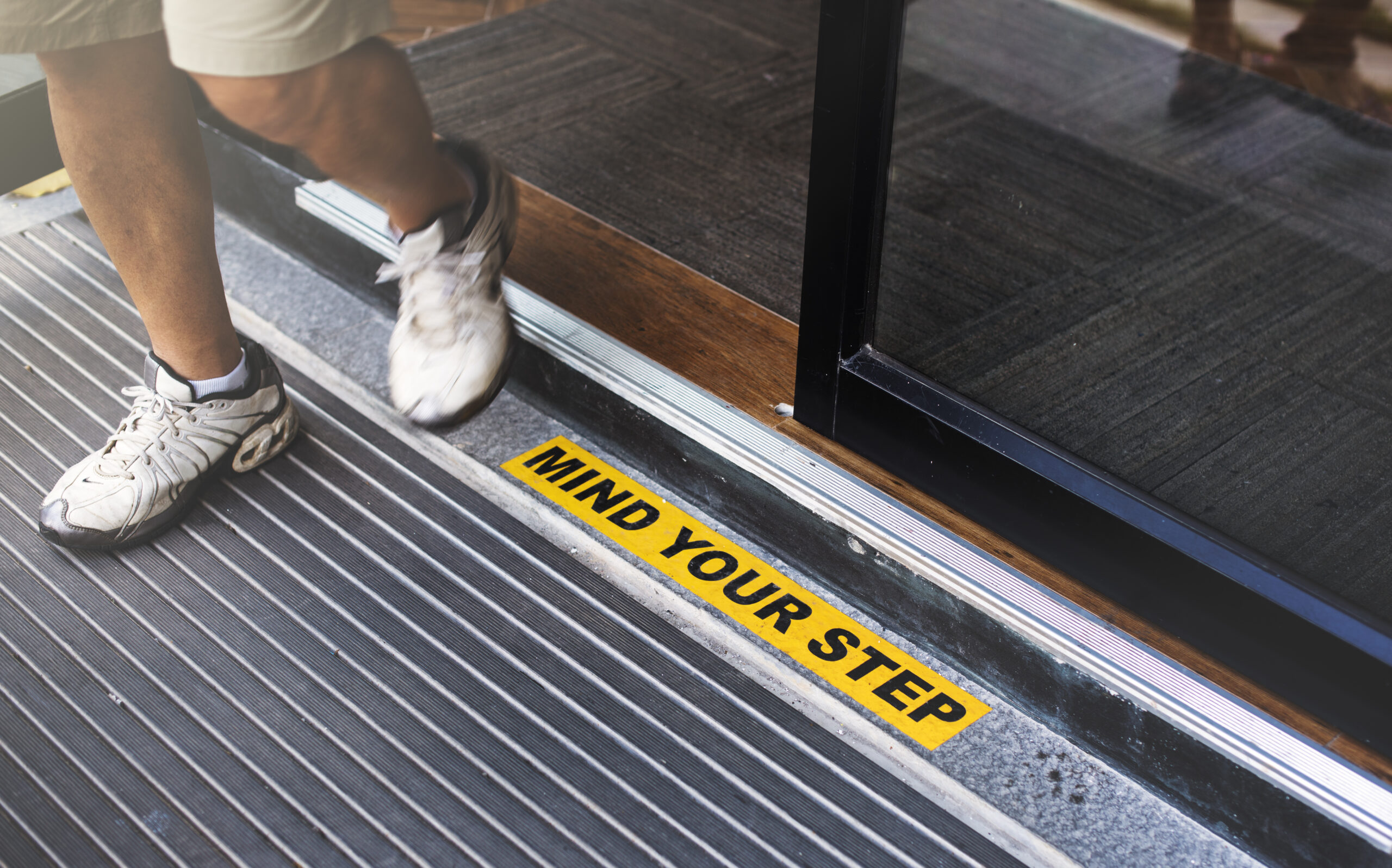
- Slips, Trips, and Falls: A customer or staff member trips over a loose floor tile or an unmarked wet floor but manages to avoid falling.
- Falling Merchandise: A poorly stacked box falls from a high shelf in a storage room, barely missing the employee below.
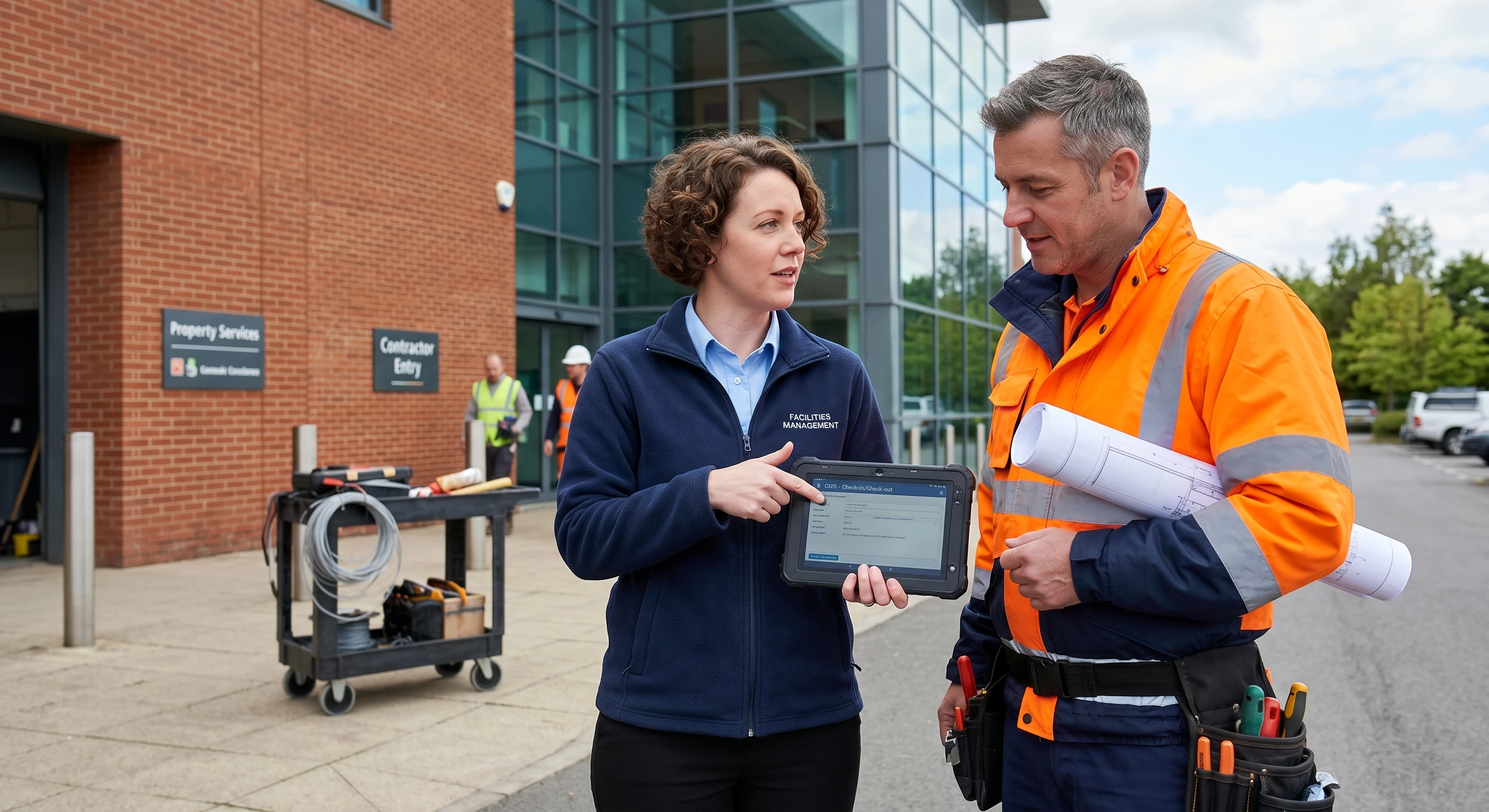
- High-Risk Work: A contractor arrives to perform roof maintenance without submitting an Electronic Work Authority Form (eWAF), but a site manager stops them before they begin the dangerous work.
Why Near Miss Reporting Matters for Enterprise Operations
Why should operations managers care about events where nothing actually happened? Because near misses are the leading indicators of future accidents.
1. Proactive Risk Reduction (The Safety Triangle)
In the 1930s, Herbert William Heinrich introduced the "Safety Triangle," which theorised that for every 1 major injury, there are 29 minor injuries and 300 near misses. By capturing and addressing the 300 near misses at the bottom of the triangle, you systematically dismantle the risks that lead to major accidents at the top.
2. Operational Continuity and Cost Savings
Accidents halt operations. They trigger investigations, legal scrutiny, compensation claims, and reputational damage. Reporting and resolving near misses drives risk as close to 0% as possible, ensuring your sites stay open, productive, and efficient.
3. Legal and Audit Defensibility
While not all near misses are legally required to be reported to regulators, having a documented history of near miss reporting and resolution proves that your organisation has a proactive safety culture. If an inspector audits your site, a robust audit trail of hazard identification and corrective actions is your best defence.
The Bottleneck: Why Traditional Near Miss Reporting Fails
If near-miss reporting is so valuable, why is it so rarely done well? The answer lies in operational friction.
For years, enterprises have relied on outdated methods to manage risk:
- Paper-Based Friction: A contractor on a site doesn't have time to walk to the site office, find a paper form, fill it out, and hand it to a manager. If reporting is hard, it won’t happen.
- The "Glove Box" SWMS: Safe Work Method Statements (SWMS) are a legal requirement for builders, but they often sit in a contractor's truck rather than being completed on-site. When a near miss happens, there is no real-time, site-specific context to tie it to.
- Lack of Real-Time Visibility: Even if a paper form is filled out, the head office operations manager has zero visibility. The report sits in a folder on one site, offering no network-wide insights.
- Broken Feedback Loops: A worker reports a hazard, but they never hear back about whether it was fixed. Eventually, they stop reporting.
How Digital Safety Management Makes Sites Safer (and Simpler)
The goal of a modern enterprise isn't simply to enforce compliance, it’s to make things easier for the enterprise to manage its workforce and dead simple for the worker on the ground.
When you remove the paperwork and introduce smart, cloud-based site operations management, near-miss reporting transforms from a burden into a seamless operational habit. Here is how modern platforms like Site360 solve the near-miss reporting challenge:
1. Dead Simple Worker Reporting
Workers shouldn't need to learn complex software or fill out dense paperwork. With a mobile-first approach, a contractor simply opens an app. Because of patented geo-fencing technology, the app already knows exactly which site they are on. Logging a near miss takes seconds, capturing photos and location data automatically. No kiosks. No complexity.
2. Legally Defensible, Site-Specific Data
Unlike standard QR code systems (which can be scanned from a couch), geo-fencing verifiably proves the worker was physically on-site when they logged the near miss or signed their digital SWMS. This technical moat makes every record legally defensible and highly accurate.
3. Automated Flagged Items and Incident Closeout
When a near miss is logged, it shouldn't disappear into a black hole. Modern systems automatically turn that report into a Flagged Item. It acts as a Corrective and Preventive Action (CAPA) system. An alert is instantly routed to the relevant site manager, who can track the issue through to resolution with a full communication thread and photo evidence.
4. Real-Time Enterprise Visibility
For the head office, the days of wondering what is happening across 50 different sites are over. Senior operations managers gain real-time oversight. You can see at a glance if a site has met its daily compliance score, who is currently on-site, and if any risks were flagged today.
5. "Done-For-You" Configuration
The biggest hurdle to adopting digital safety tools is the setup. Enterprises shouldn't have to spend months learning a system to build their own forms, inductions, and workflows. The best solution is a partner that builds and configures everything, from site-specific inductions to automated reporting workflows, on the client's behalf.
4 Steps to Improve Your Near Miss Reporting Culture
Technology is the enabler, but culture drives the action. Here is how to foster a workplace where near misses are celebrated as learning opportunities:
- Remove the Blame: Frame near misses as a failure of the system, not the person. If a worker drops a tool, ask why the workspace allowed for it, rather than punishing the worker.
- Make it Effortless: Ditch the paper. Equip contractors and employees with a geofenced mobile app that makes reporting as easy as sending a text message.
- Ensure Pre-Qualification: Stop risks before they arrive. Use a system that verifies contractor identity, licenses, insurances, and training certifications before they ever set foot on site.
- Close the Loop: When a worker reports a near miss, use an automated closeout system to notify them when the hazard has been fixed. This builds trust and encourages future reporting.
A near miss in safety is an opportunity to fix a broken process before it breaks your business. But capturing these opportunities requires moving away from reactive, paper-based compliance and moving toward proactive, frictionless operations management.
By giving your workers a dead-simple mobile tool, relying on geo-fenced data for site-specific accuracy, and using automated closeout workflows, you can drive your site risk as close to zero as possible.
Ready to gain real-time visibility and control across your entire site network? Site360 builds and configures the exact workflows, SWMS, and reporting tools you need, so you don't have to lift a finger. Experience full audit-ready control without the operational burden. Learn more about how Site360 makes site management effortlessly safe today.
Frequently Asked Questions
What is the difference between a near miss and a hazard?
A hazard is a condition with the potential to cause harm (e.g., an exposed wire). A near miss is an event where someone interacts with that hazard and narrowly escapes injury (e.g., reaching for the exposed wire but stopping just in time).
Are near misses recordable by regulatory bodies?
In most jurisdictions (like Safe Work Australia or OSHA in the US), near misses are not legally recordable unless they involve a "dangerous incident" (e.g., a major structural collapse or chemical spill), even if no one was hurt. However, internally recording all near misses is a critical best practice for enterprise risk management.
How do you write a near-miss report?
Keep it simple and factual. Include the date, exact location, individuals involved, a description of what happened, the potential outcome (what could have happened), and immediate actions taken. Using a digital platform with geo-fencing and photo uploads automates most of this process.





_%20Definition%2C%20Calculation%2C%20and%20Examples.jpg)

_.webp)

%20A%20Guide%20for%20Construction%20(Hero).webp)
.png)











.jpg)